Your brain changes through what you practise every day
Long-term stress doesn't just affect how you feel. It also affects how your brain processes information, remembers, makes connections and reacts.
The good news is that your brain remains changeable.
By first supporting recovery and regulation, then reconditioning automatic patterns and finally training new mental skills in a targeted way, you can step by step learn to think, feel and act differently.
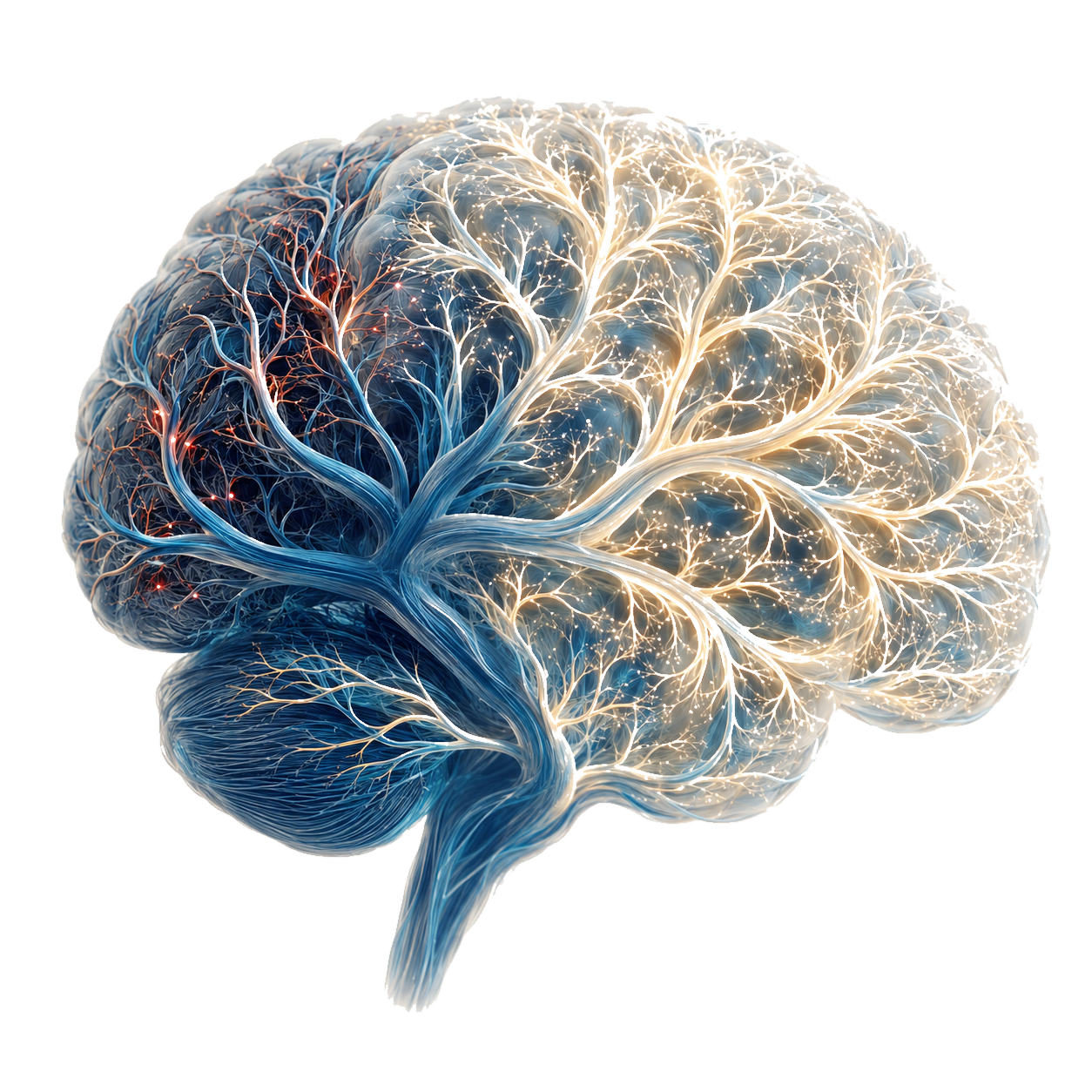
The core of mental fitness: training your brain so that you not only understand what you need, but can also apply it when it matters.
Under lasting stress, survival takes priority over recovery
Stress in itself isn't unhealthy. A temporary stress response helps you act quickly, sharpen your attention and release energy.
The problem arises when the tension lasts a long time and your body doesn't get enough opportunity to recover.
Under stress your body produces cortisol, among other things. That hormone is useful in a short-lived response. But when your stress system stays activated for a long time, it can disrupt processes involved in sleep, attention, memory, emotion regulation and recovery.
Scientific research also shows that chronic stress is associated with changes in the brain's plasticity and in the structure of connections between brain cells.
You may notice this in things like:
- Finding it harder to settle down
- Less restorative sleep
- Getting distracted more quickly
- Finding it harder to remember information
- Thinking less clearly
- Reacting automatically more often
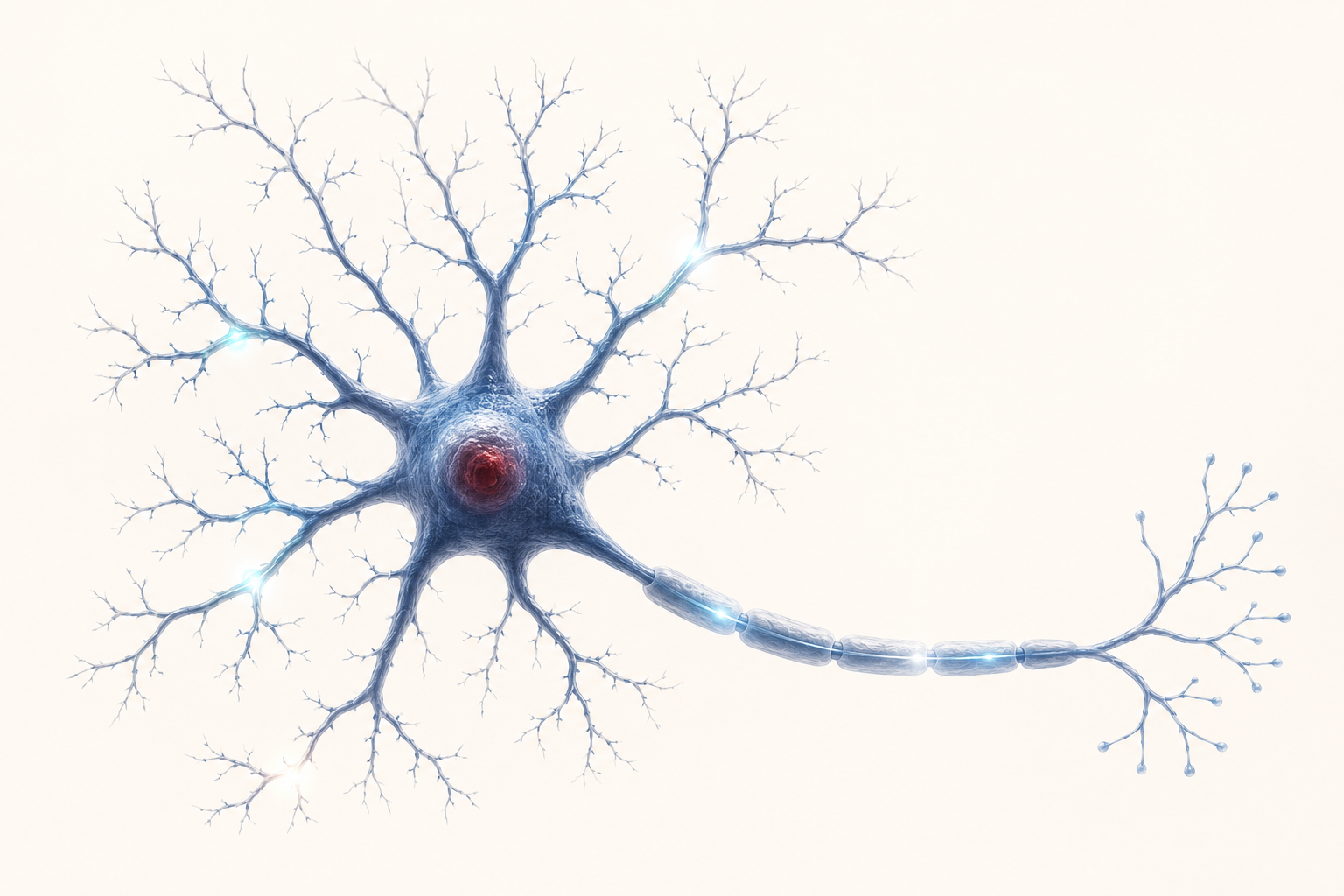
What are dendrites?
Dendrites are the branching extensions through which nerve cells receive signals. They help brain cells pass on information and connect with each other.
Their structure isn't static. Experiences, long-term stress, recovery and training can influence how these connections work and are organised.
So your brain doesn't only respond to what you go through. It also adapts to the state it finds itself in over longer periods.
Your brain can recover and adapt again
Your brain is not a fixed system. It keeps adapting throughout your life, shaped by what you experience, think and repeatedly do.
We call this capacity to change neuroplasticity.
Research into meditation, attention training and other forms of mental training shows that regular practice can be associated with changes in brain activity and brain networks. It can also contribute to less perceived stress and better regulation of attention and emotions.
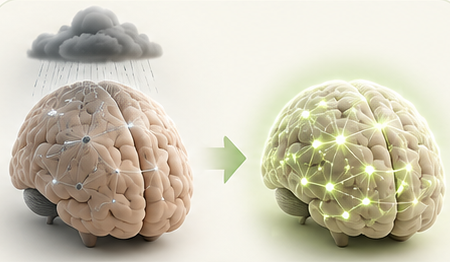
Prolonged strain affects how your brain works. Conscious moments of recovery help you settle down and give your brain more room to learn and change again.
One relaxation exercise doesn't undo the effects of long-term stress. But by regularly and consciously coming to rest, you give your brain more room again to recover, learn and change.
Regular recovery moments help you to:
- Notice tension earlier
- Come to rest physically and mentally
- Redirect your attention
- Step back from automatic thoughts
- Think more clearly
- Choose more consciously how you respond
A brain in alarm falls back on what's familiar. A brain that learns to recover regains room to learn and to choose.
Calm isn't the end goal, it's the basis for lasting change
Recovery is an essential starting point of mental fitness, but mental fitness doesn't stop at relaxing.
You can learn to calm your brain and still keep falling back into thoughts, beliefs or habits that create tension again and again.
That's why mental training consists of three consecutive steps.
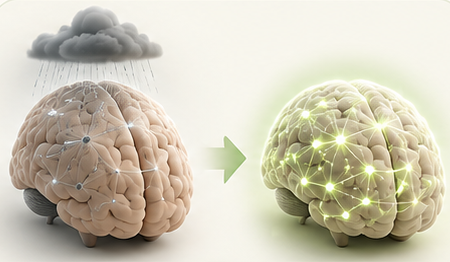
Mental calm
You create room again for recovery, attention and learning.

New beliefs and habits
You recognise automatic patterns and practise new beliefs, habits and responses.
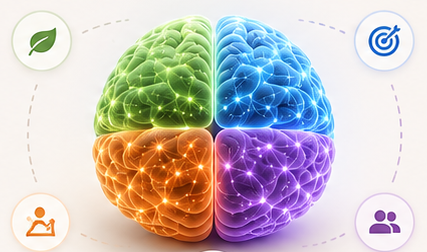
Train four mental muscle groups
Through daily training, new skills become increasingly available.
Not just less stress, but a brain that recovers better, thinks more clearly and responds with more resilience.
What you practise becomes easier when you need it
Every time you think, feel or act in a certain way, you activate networks in your brain. Responses you repeat often gradually become more familiar and easier to apply.
That applies both to automatic patterns you want to let go of and to mental skills you consciously want to develop.
That's why mental fitness works with short, focused training moments that you repeat regularly.
One process in three steps
Automatic pattern
You receive a difficult email and respond immediately out of irritation or defensiveness.
Reconditioning from calm
You notice your tension, slow down and explore which belief drives your reaction. From deep relaxation you practise a more supportive belief and use your imagination to mentally prepare the response you want.
Applying and anchoring
You turn the new response into concrete behaviour. By combining and repeating relaxation, imagination and application, the new pattern becomes better anchored and more readily available when it matters.
An overloaded brain learns less easily. From calm you can prepare new beliefs and responses, and then anchor them further through application.
Four mental muscle groups shape how you think, feel and act
When there's enough room again to learn and to choose, you can strengthen the skills you need every day.
Within the Prana Mental Fitness approach, these skills are brought together in four mental muscle groups:
Resilience & energy
Recovering, regulating tension, guarding your energy and dealing with pressure and setbacks.
Focus & goals
Directing your attention, setting priorities, limiting distraction and acting with purpose.
Self-direction & personal growth
Recognising thoughts, beliefs, emotions and habits, and consciously adjusting them.
Connection & leadership
Listening, communicating clearly, setting boundaries, collaborating and building meaningful relationships.
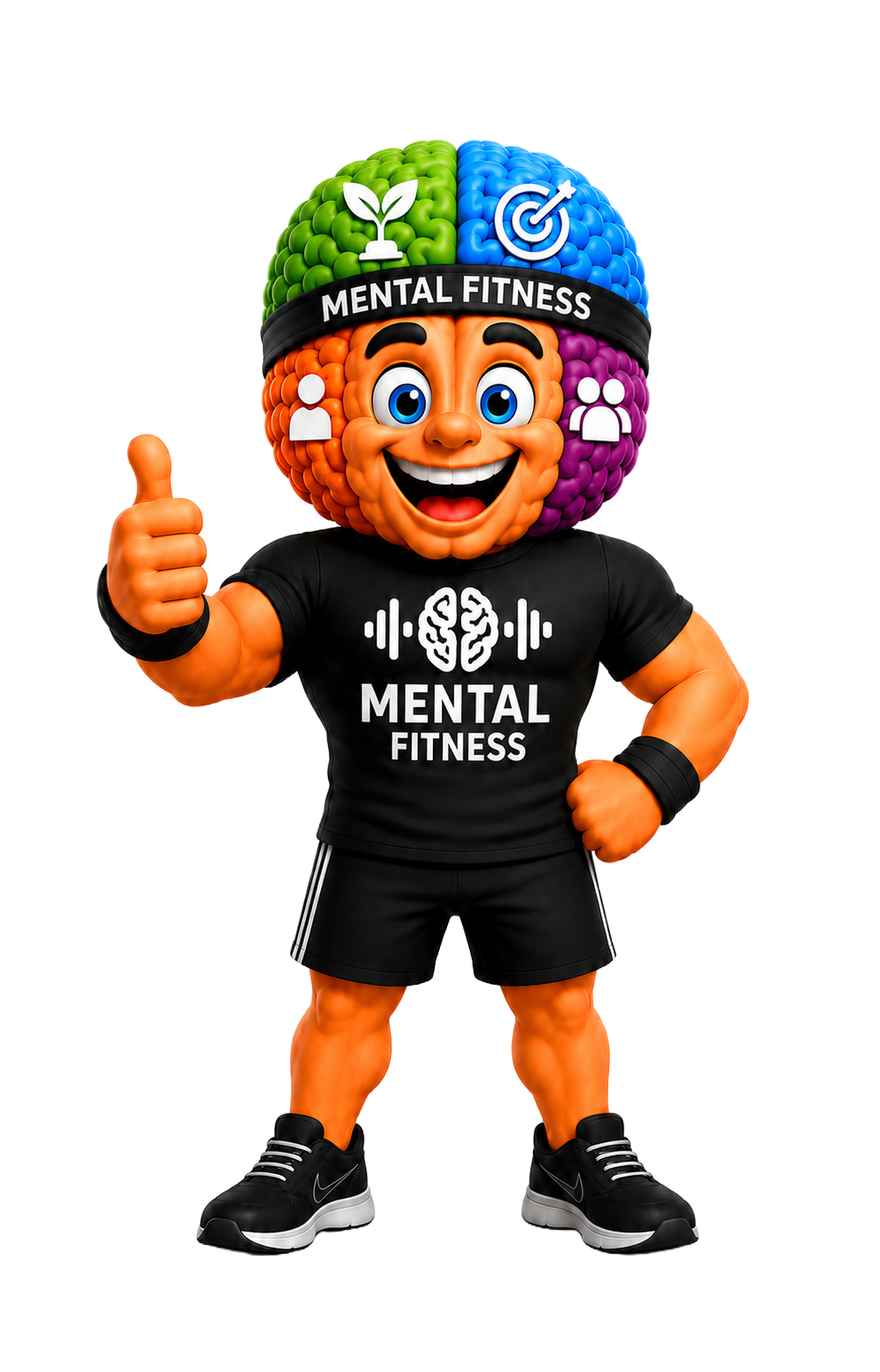
The four muscle groups constantly work together. What you experience may therefore originate in a different muscle group than you'd first think.
You find it hard to concentrate
That doesn't have to be a focus problem alone. Perhaps your brain hasn't had enough recovery, or your tension is constantly too high.
You find it hard to set boundaries
That takes more than communication. Beliefs, guilt, self-direction and the ability to tolerate tension all play a role.
You react defensively in a conversation
Both connection and resilience can be involved. Regulating first helps you listen better and respond more consciously afterwards.
That's why mental training doesn't start with a random exercise, but with understanding which skills you truly need.
Discover what each mental muscle group means for you
Each muscle group consists of skills you use every day. Discover which signals you can recognise and what you can strengthen in a targeted way.
Resilience & energy
Recovering, releasing tension and guarding your energy better.
- You find it hard to settle down.
- You quickly feel overstimulated or drained.
- You regularly push past your limits.
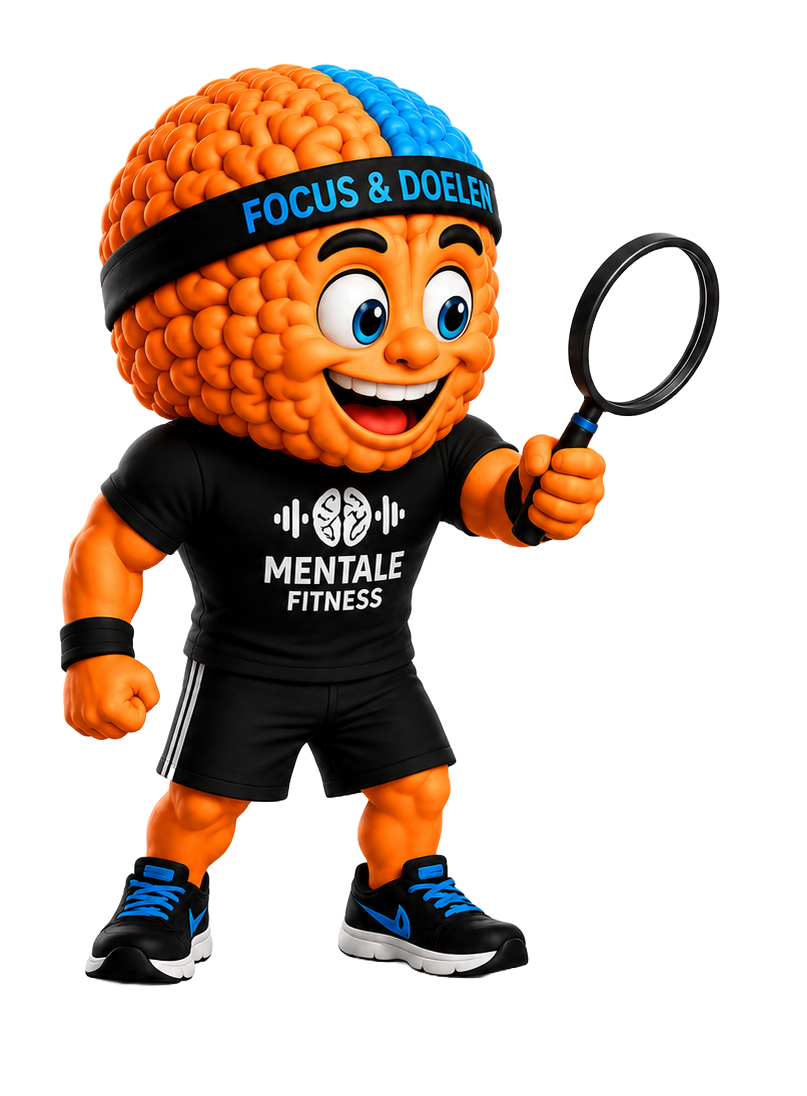
Focus & goals
Directing your attention, making choices and finishing what you start.
- You get distracted quickly and lose the thread.
- You start a lot, but finish little.
- You don't always know what really matters right now.
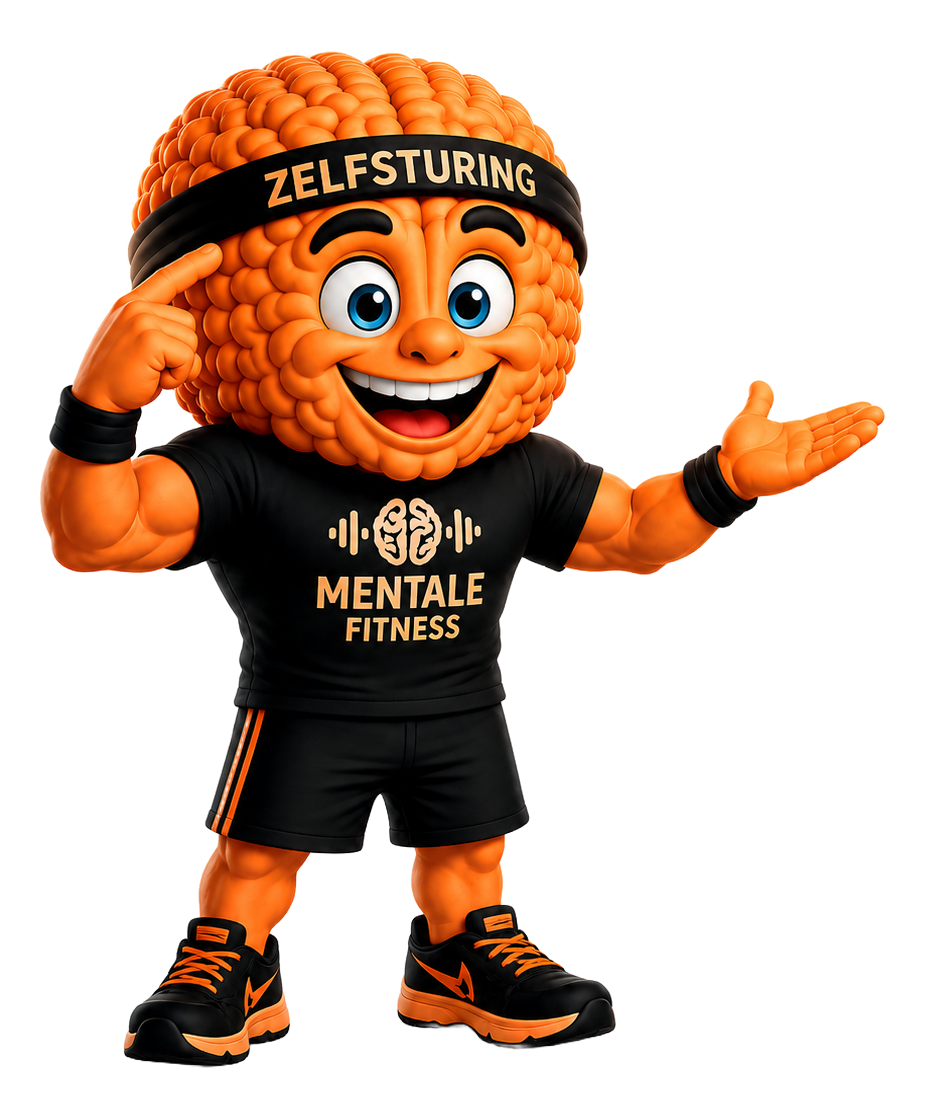
Self-direction & growth
Breaking automatic patterns and choosing more consciously.
- You often react faster than you'd like.
- Your new habits don't stick.
- You set the bar very high for yourself.
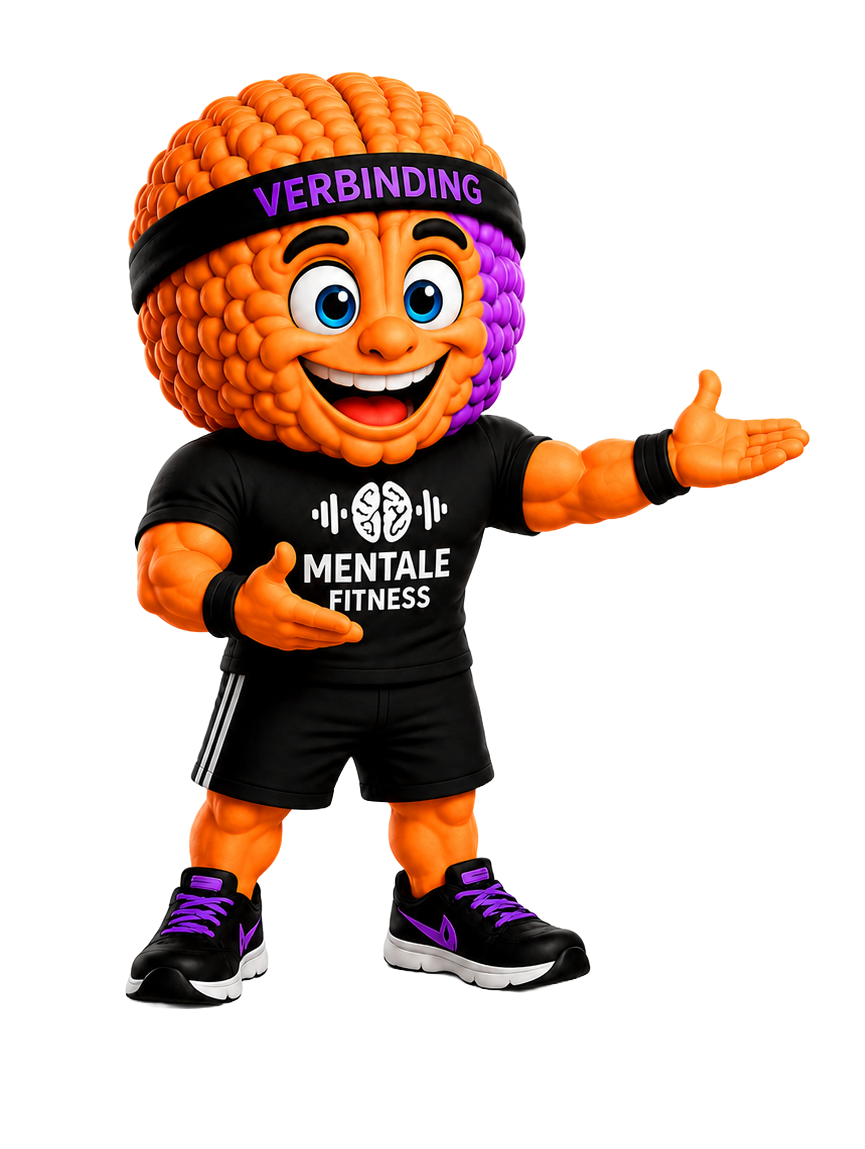
Connection & leadership
Communicating clearly, listening and staying calm under tension.
- You swallow things or react a bit too sharply.
- You find it hard to speak up.
- You quickly feel misunderstood in conversations.
Together, these four mental muscle groups determine how well your brain can recover, choose direction, adjust and connect.
Mental training shouldn't become a new source of pressure
You don't need to free up an hour every day to train your mental fitness.
With short, focused exercises and personal actions you strengthen the skills you need in daily life. Not by doing as much as possible, but by regularly practising what matters to you.
EXAMPLES FROM EVERYDAY LIFE
- Three minutes of conscious breathing
- Ten minutes of releasing tension
- A distraction-free focus block
- Mentally preparing an important task
- Examining a belief
- A short reflection at the end of the day
- Consciously voicing a boundary
- Structuring and mentally preparing a conversation
Being mentally fit doesn't mean that everything always goes well
Not always being positive
Mental fitness doesn't mean pushing away difficult thoughts or emotions. You learn to recognise them sooner and handle them more consciously.
Not being productive all the time
Rest, recovery and guarding your boundaries aren't an interruption of mental fitness — they're an essential part of it.
Not solving everything alone
Mental fitness doesn't mean you have to manage everything on your own. You also learn to recognise when support is needed and to call on it in time.
Not a replacement for professional care
Mental fitness doesn't replace medical or psychological diagnosis, treatment or therapy. For severe, acute or persistent complaints, professional support is advised.
Being mentally fit means you keep getting better at recovering, adjusting and choosing direction again, also in difficult moments.
Discover how to train your brain for lasting change
In the free webinar you discover how stress, recovery and repeated training affect your brain. You get to know the four mental muscle groups and see how to strengthen mental skills step by step.
You also get a demonstration of the Mental Fitness Studio and discover how a personal training plan helps you move from insight to daily application.
Free online · No prior knowledge needed · Includes a demo of the Mental Fitness Studio
Or discover how the Mental Fitness Studio supports you every day →